


 Dresses
 Trousers
 Evening Dresses
 Special Occasion Outfits
 Midi Dresses
 Earrings
 Hats
HatsWhat is occasion dressing? 50%+ UK events need this guide

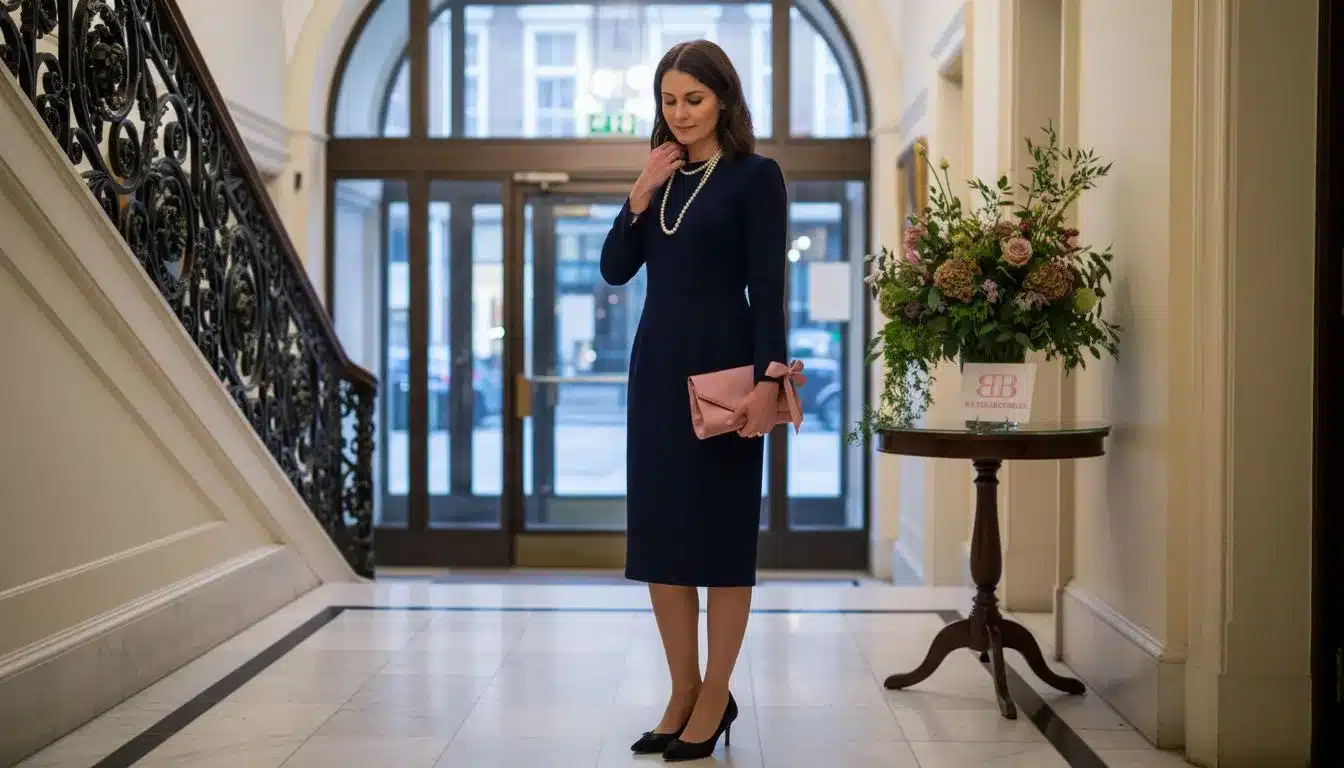
Choosing the right outfit for a formal event shouldn’t feel like cracking a secret code. Many women across the UK and Ireland struggle with occasion dressing, often believing every formal invitation demands a floor-length gown. In reality, over 50% of formal UK event invitations specify cocktail attire, which welcomes knee-length or midi dresses. This guide decodes the most common UK dress codes, clarifies misconceptions, and equips you with practical outfit strategies to feel confident at weddings, galas, and celebrations.
Table of Contents
- Definition And Concept Of Occasion Dressing
- Common Dress Codes And Their Meanings In The UK
- Misconceptions And Pitfalls In Occasion Dressing
- Comparison Framework For UK Dress Codes
- Practical Outfit Ideas For Common Formal Events
- Accessory And Fabric Considerations
- Styling Guidance Tailored To UK And Ireland Events
- Discover Stylish Occasion Dresses And Accessories At Beecollectibles
Key takeaways
| Point | Details |
|---|---|
| Occasion dressing basics | Matching your outfit to the event’s formality, context, and cultural norms builds social confidence. |
| Four main UK dress codes | Black Tie, Cocktail, Semi-Formal, and Business Formal each have distinct requirements and flexibility. |
| Common pitfalls | Misreading dress codes leads to overdressing or uncomfortable outfit choices at formal events. |
| Comparison framework | A structured model clarifies dress code expectations and simplifies wardrobe planning. |
| Seasonal considerations | Fabric and accessory choices matched to UK weather enhance comfort and appropriateness. |
Definition and concept of occasion dressing
Occasion dressing involves choosing attire appropriate to the social and cultural context of an event. In the UK and Ireland, this practice reflects respect for hosts, guests, and the event’s significance. It’s not about owning an expensive wardrobe but rather curating key pieces that align with formal expectations.
Financial investment varies widely. Some women build a capsule occasion wardrobe with versatile dresses and accessories, while others rent designer pieces for one-off celebrations. The approach you choose depends on event frequency and personal budget.
Successful occasion dressing requires understanding several elements:
- Dress code interpretation based on invitation wording and event type
- Fabric selection appropriate to season and venue
- Accessory coordination that complements without overwhelming
- Color and silhouette choices that honor cultural norms
This foundation prepares you to decode invitations confidently and make smart styling decisions. When you understand what different dress codes actually require, the anxiety around formal event dressing disappears. You’ll approach your wardrobe with purpose rather than panic.
Common dress codes and their meanings in the UK
UK formal events typically fall into four main dress code categories, each with distinct expectations. Black Tie represents the most formal tier, traditionally calling for floor-length gowns in rich fabrics like silk, satin, or velvet. Think elegant silhouettes, refined accessories, and classic styling that prioritizes sophistication over trendy details.
Cocktail attire offers more flexibility and appears frequently on UK event invitations. Over 50% of formal UK event invitations specify cocktail attire, allowing knee-length or midi dresses in various colors and fabrics. This category bridges the gap between casual and ultra-formal, giving you room to express personal style.
Semi-Formal sits between cocktail and business attire. Dresses or tailored suits work well here, with moderate formality expected but less strictness than Black Tie events. Think wedding receptions, upscale dinner parties, or daytime celebrations where polished appearance matters but full evening glamor isn’t required.
Business Formal applies to corporate events, award ceremonies, or professional galas. Tailored suits, conservative dresses in neutral tones, and minimal accessories define this category. The focus shifts toward professional polish rather than fashion-forward statements.
Navigating these categories becomes easier when you match invitation language to dress code expectations. Terms like “black tie optional” or “formal attire” provide clues about which tier applies. Check our evening wear selection tips for additional guidance on interpreting event requirements.

Misconceptions and pitfalls in occasion dressing
The belief that all formal events require floor-length gowns causes unnecessary stress and expense for many UK women. Many UK formal designs specify cocktail attire, often misunderstood as requiring floor-length gowns, leading to overdressing and social discomfort. A knee-length dress often suits the occasion perfectly.
Misreading dress codes creates awkward situations where you feel either underdressed or overdone compared to other guests. This stems from assuming all formal events share identical requirements. Each dress code category exists for a reason, defining appropriate formality levels for different event types.
Over-accessorizing represents another common mistake. Piling on statement jewelry, bold bags, and dramatic shoes simultaneously overwhelms your outfit rather than enhancing it. The UK occasion dressing aesthetic tends toward understated elegance, where one or two carefully chosen pieces make a stronger impact than multiple competing elements.
Ignoring seasonal appropriateness causes physical discomfort that distracts from enjoying the event. Wearing heavy velvet to a summer garden wedding or lightweight chiffon to a winter gala creates practical problems beyond style concerns.
Common pitfalls to avoid:
- Assuming “formal” always means floor-length gowns
- Choosing trends over dress code appropriateness
- Overdoing accessories instead of curating key pieces
- Ignoring venue and weather conditions
- Copying celebrity red carpet looks without context
Pro Tip: When invitation wording seems ambiguous, research the venue and event type online or contact the host for clarification. Arriving appropriately dressed beats guessing wrong and feeling uncomfortable all evening.
Comparison framework for UK dress codes
A structured comparison helps you quickly identify which dress code applies and what it requires. This framework simplifies wardrobe decisions by highlighting key differences across the four main categories.
| Dress Code | Outfit Style | Fabric Choices | Accessories | Color Palette |
|---|---|---|---|---|
| Black Tie | Floor-length gowns, elegant silhouettes | Silk, satin, velvet, chiffon | Statement jewelry, clutch, formal heels | Classic jewel tones, black, navy, metallics |
| Cocktail | Knee-length or midi dresses | Lighter silks, crepe, lace | Moderate jewelry, small handbag | Versatile colors, pastels, brights acceptable |
| Semi-Formal | Dresses or suits, below-knee length | Structured fabrics, blends | Subtle pieces, functional bag | Neutrals preferred, soft colors |
| Business Formal | Tailored suits, conservative dresses | Wool, cotton blends, structured materials | Minimal jewelry, professional bag | Navy, black, gray, muted tones |
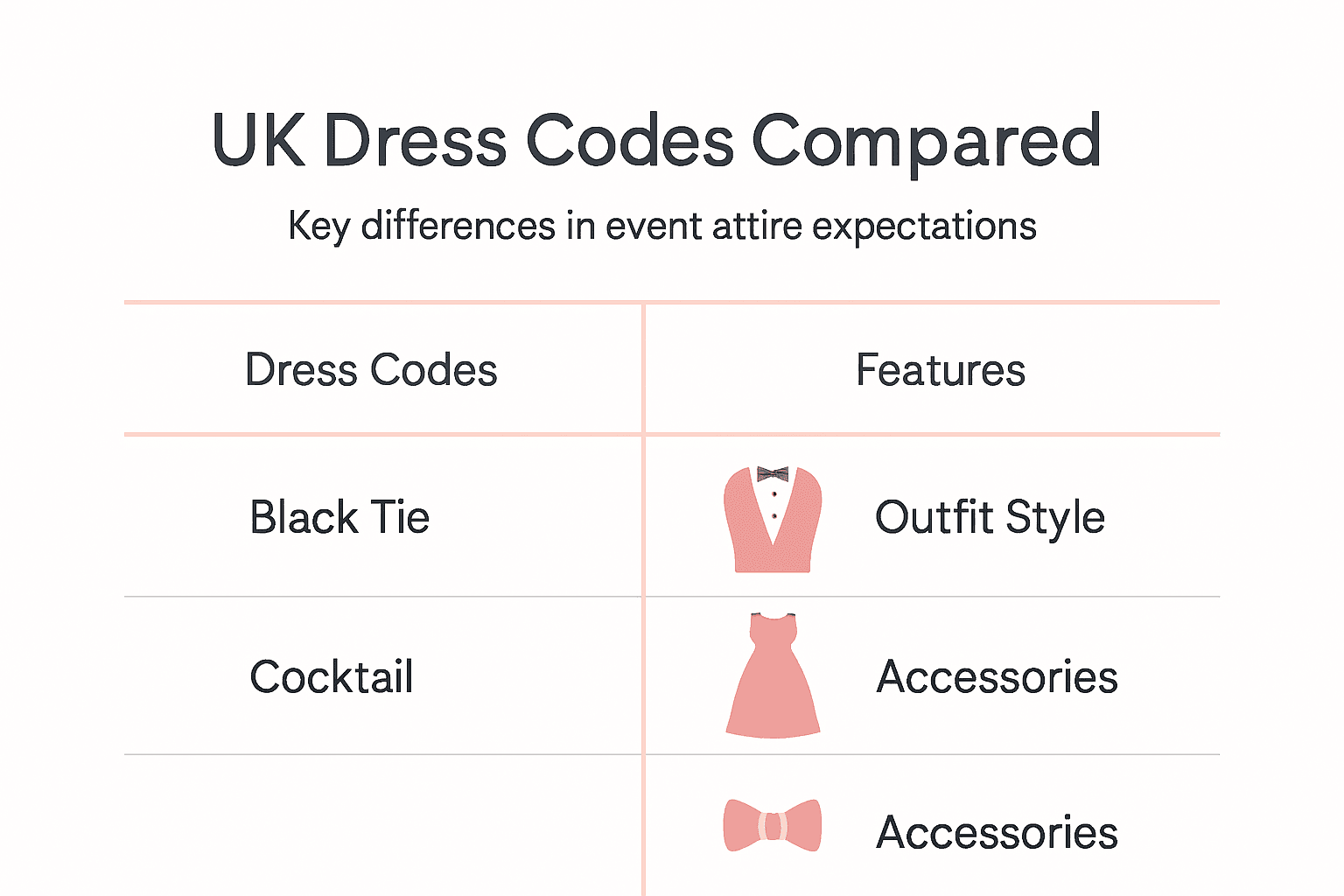
This model reveals that flexibility decreases as formality increases. Black Tie events demand adherence to traditional expectations, while Cocktail and Semi-Formal categories allow more personal interpretation. Business Formal prioritizes professional polish over fashion expression.
Using this framework, you can decode most invitation language quickly. “Black tie optional” suggests the host accepts both Black Tie and Cocktail attire. “Smart casual” typically means Semi-Formal with relaxed elements. The key is matching invitation cues to the appropriate column.
Personalization happens within boundaries rather than ignoring them. Choose colors that flatter your skin tone, silhouettes that suit your body type, and accessories that reflect your taste, all while honoring the event’s formality tier. This balance creates authentic style without dress code violations.
Practical outfit ideas for common formal events
Applying dress code knowledge to real events makes the concept tangible. Consider a winter gala dinner with Black Tie requirements. A floor-length velvet gown in emerald or burgundy pairs beautifully with gold jewelry and a structured clutch. The rich fabric provides warmth while maintaining elegance.
For summer weddings with cocktail attire specified, a knee-length chiffon dress in blush or lavender works perfectly. Delicate drop earrings, a small crossbody bag, and block heel sandals balance style with outdoor venue practicality. Seasonal fabric choices and color trends directly impact outfit comfort and style appropriateness for UK formal events.
Step-by-step outfit building:
- Identify the event type and stated dress code from the invitation
- Select season-appropriate fabric that matches formality requirements
- Choose a silhouette flattering to your body and aligned with dress code
- Add 1-2 key accessories that complement without competing
- Confirm comfort for the event duration and venue conditions
Autumn charity galas often call for Semi-Formal attire. A midi-length dress in deep plum or forest green with long sleeves addresses cooler temperatures. Pair with understated stud earrings and a simple bracelet for polished simplicity.
Spring cocktail parties welcome lighter colors and playful details. A fit-and-flare dress in coral or mint with subtle print details feels fresh and appropriate. Keep accessories minimal to let the dress shine.
Mixing timeless pieces with current trends maximizes wearability across multiple events:
- Classic black dress styled differently with varied accessories
- Statement jewelry that transforms simple silhouettes
- Versatile heels in neutral tones that pair with multiple outfits
- Layering pieces like wraps or tailored jackets for flexibility
Explore our UK wedding outfit checklist 2026 for seasonal considerations and our evening wear ideas for additional inspiration.
Accessory and fabric considerations
Fabric selection directly impacts both comfort and appropriateness. Summer events in the UK benefit from breathable materials like silk, chiffon, or lightweight crepe that handle occasional warmth without causing overheating. Winter celebrations demand richer textures such as velvet, satin, or heavier silk blends that provide warmth while maintaining formal elegance.
Accessories serve as the finishing touches that elevate basic outfits into polished looks. Pearl or diamond stud earrings work across multiple dress codes without overwhelming. A delicate pendant necklace adds interest to simple necklines. Minimalist bracelets or cocktail rings provide subtle sparkle.
Balancing boldness with subtlety defines successful UK occasion accessorizing. If your dress features intricate beading or bold color, keep jewelry understated. Conversely, simple dress silhouettes welcome statement earrings or a dramatic necklace as the focal point. Never compete for attention across multiple elements.
Accessories subtly influence outfit perception; choosing tasteful, well-matched pieces enhances appropriateness without overwhelming. This principle guides smart accessory selection that complements rather than dominates.
Key accessory guidelines:
- Match metal tones across all pieces for cohesion
- Coordinate accessory formality with dress code tier
- Choose bag size appropriate to event type
- Consider venue when selecting heel height and style
- Layer delicate pieces rather than wearing one heavy item
Pro Tip: Match your accessory materials to your dress fabric texture and color palette for seamless coordination. Gold jewelry complements warm-toned fabrics like burgundy or emerald, while silver suits cool tones like navy or gray.
Avoid overly flashy or heavy accessories that detract from your overall presentation. UK formal events favor refined elegance over attention-grabbing drama. Browse our accessory ideas and fabric and accessory guidance for additional inspiration.
Styling guidance tailored to UK and Ireland events
Incorporating local fashion trends while respecting dress code boundaries creates authentic personal style. Current UK trends in 2026 favor jewel tones, midi-length silhouettes, and sustainable fabric choices. Ireland’s fashion scene celebrates both classic elegance and contemporary edge, offering inspiration for women seeking unique occasion looks.
Balancing dress code adherence with personal expression builds confidence that translates into genuine enjoyment at events. You don’t need to abandon your style identity to dress appropriately. Instead, find the overlap between dress code requirements and your aesthetic preferences.
Practical personalization examples:
- Pairing a classic black cocktail dress with trend-forward geometric earrings
- Choosing a semi-formal suit in your signature color rather than default navy
- Adding a vintage brooch to a modern gown for personal storytelling
- Selecting shoes in an unexpected color that still honors formality
Confidence grows when your outfit reflects your identity within event norms. Women who feel authentically dressed participate more fully in celebrations rather than worrying about appearance. This psychological benefit matters as much as technical dress code adherence.
Supporting Irish fashion brands allows you to express unique style aligned with local cultural context. Many Irish designers create occasion wear that honors traditional elegance while incorporating contemporary silhouettes and sustainable practices.
Remember that occasion dressing serves connection and celebration rather than rigid conformity. The goal is appearing polished and respectful while feeling comfortable in your own skin. When you achieve this balance, you’ll actually enjoy formal events rather than enduring them.
Discover stylish occasion dresses and accessories at Beecollectibles
Now that you understand UK dress codes and styling strategies, finding the perfect outfit becomes your next step. Beecollectibles offers curated collections of occasion dresses Ireland designed specifically for formal events across the UK and Ireland.
Our selection spans Black Tie gowns, Cocktail dresses, and Semi-Formal pieces that align with the dress code framework outlined in this guide. Browse elegant silhouettes in seasonal fabrics, from winter velvets to summer chiffons, all chosen to help you dress confidently for any celebration.
Complete your look with our occasion accessories collection, featuring jewelry, bags, and styling pieces that add polish without overwhelming. Whether you need statement earrings for a simple dress or delicate pieces to complement detailed gowns, you’ll find options that honor UK aesthetic preferences.
Explore our full range of party and event dresses to build your curated occasion wardrobe. Shopping with clear dress code understanding transforms the experience from stressful to enjoyable, helping you invest in pieces you’ll wear confidently across multiple events.
FAQ
What is the difference between cocktail and semi-formal attire?
Cocktail attire welcomes knee-length or midi dresses with flexibility in colors, fabrics, and styling details. Semi-formal is slightly more conservative, often requiring longer hemlines and subdued color palettes that bridge casual and Black Tie formality.
How can I adapt occasion dressing for UK weather?
Choose warm fabrics like velvet or heavy silk for winter events and lighter chiffon or crepe for summer celebrations. Consider practical layers such as elegant wraps, tailored jackets, or shawls for outdoor venues and unpredictable weather.
Are accessories important for occasion dressing?
Yes, subtle and tasteful accessories enhance your outfit’s polish and complete your look. Over-accessorizing detracts from overall elegance, so aim for balance by selecting one or two statement pieces rather than competing elements.
Can I personalize my outfit while following a dress code?
Absolutely. Blending personal touches with dress code requirements increases both confidence and style authenticity. Use colors that flatter you, accessories reflecting your taste, and silhouettes suiting your body type while honoring the event’s formality tier.
What should I do if the dress code is unclear?
Research the venue and event type online for context clues about expected formality. Contact the host directly if uncertainty remains, as arriving appropriately dressed matters more than avoiding a simple clarifying question.